
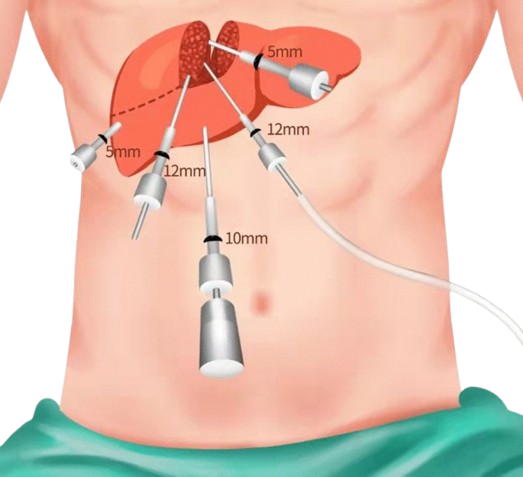
Laparoscopic liver surgery is a minimally invasive “keyhole” approach to removing benign or malignant liver tumors, cysts, or sections of the liver. Using specialized instruments and a camera through small abdominal incisions, it offers reduced pain, faster recovery, and better cosmetic outcomes compared to traditional open surgery, while allowing for up to 75% resection.
Key Aspects of Laparoscopic Liver Surgery
- Technique: The procedure involves 4–6 small incisions (5mm–12mm), where the abdomen is inflated with gas to create space for the laparoscope and instruments.
- Benefits: Patients experience less trauma, minimal scarring, shorter hospital stays (often 1–2 weeks for return to normal activity), and faster recovery than open surgery.
- Safety and Efficacy: While considered technically demanding due to the liver’s vascular nature, it is safe in experienced hands for both minor and major liver resections.
- Indications: It is used to remove cancerous (e.g., hepatocellular carcinoma) and benign tumors, as well as for cysts.
- Limitations: Complex cases requiring major vascular reconstruction or very large tumors may still require an open approach, though, in many cases, a small incision at the bottom of the abdomen is used to remove the liver specimen.
Types of Laparoscopic Procedures
- Pure Laparoscopic Liver Resection (PLLR): The entire procedure is performed via port sites.
- Hand-Assisted Laparoscopic Surgery (HALS): A small port allows the surgeon to use their hand, assisting with complex cases.
- Hybrid Hepatectomy: Combines a short, conventional incision (mini-laparotomy) for specific parts of the surgery with laparoscopic assistance.
Recovery and Risks
Patients may be up and walking the day after surgery. While safe, the primary risks include bleeding and, less frequently, bile leakage. The procedure, often referred to as keyhole liver surgery, represents a major advancement in hepatopancreaticobiliary surgery over the last decade.